
Automotive

What to Check Before Every Oil Change Appointment

Share
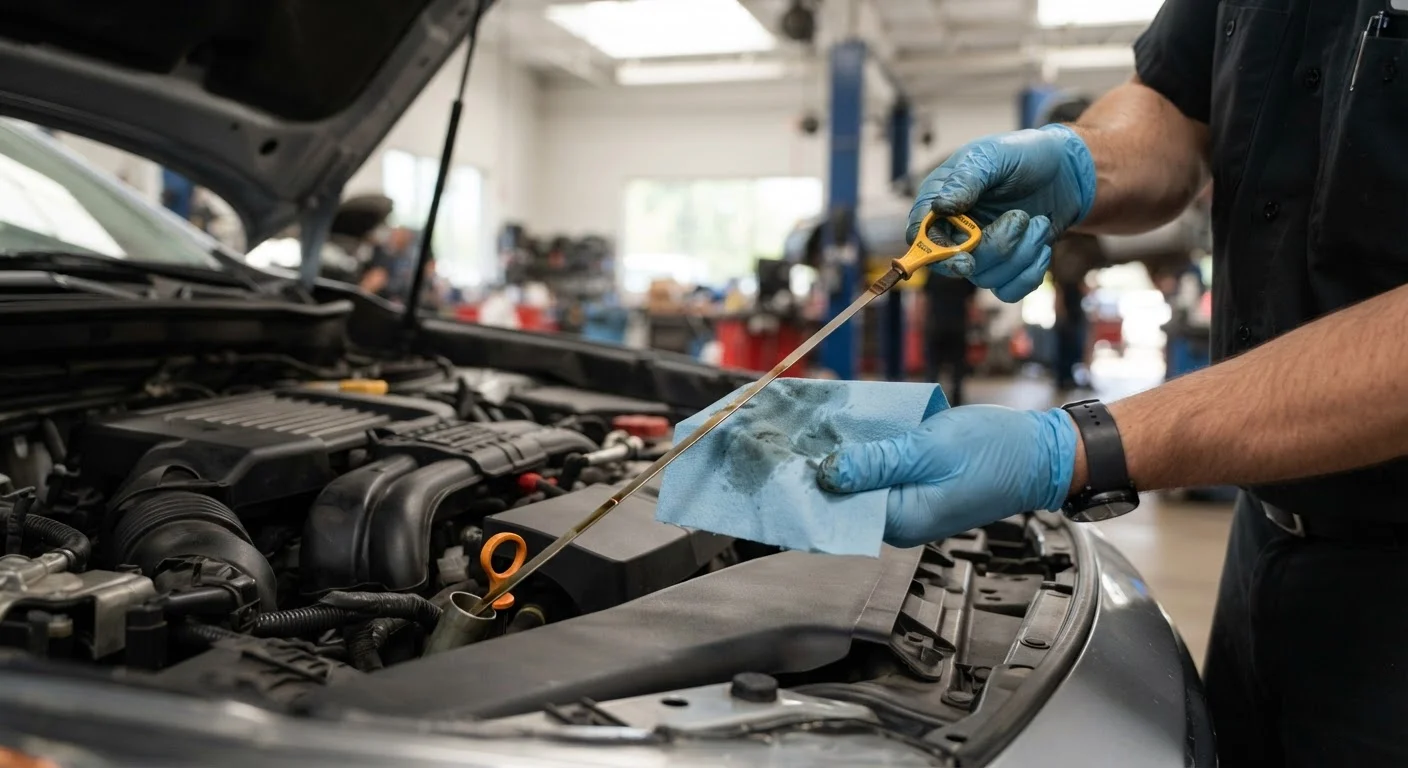
Mechanic checking engine oil dipstick on a family car in a garage before an oil change service

Key Takeaways

Checking fluid levels and wear items before your appointment gives you useful data to share with your technician.
Many items on this list are visual or simple touch checks that require no special tools.
Knowing what you observe in advance helps you avoid agreeing to repairs without context.
Oil change intervals are also a practical time to review tire condition, wiper performance, and cabin air filter status.
Keeping a simple log of what you checked and when helps track your vehicle's maintenance history over time.
15–30 min

Summary

18 items · 15 to 30 minutes

Why this inspection matters before you hand over the keys

An oil change appointment is a short window where a technician is already under the hood. That makes it a natural checkpoint for a broader look at your vehicle's condition, but only if you arrive knowing what you have already observed. A shop that identifies a problem you had not noticed will always have more leverage in the conversation. Doing a quick walk-around and under-hood check beforehand gives you a baseline.

There is also a practical cost angle. Service advisors routinely offer add-ons at oil change visits: filters, fluid top-ups, wiper blades. Some of those recommendations are legitimate, others are premature. If you already know your cabin air filter is clean or your tires still have solid tread, you can decline with confidence rather than guessing. That kind of informed decision-making adds up across a vehicle's life, similar to how a regular financial review keeps spending from drifting, as covered in the monthly financial checkup guide.

None of this requires mechanical training. Most of the checks below are visual or involve a simple gauge. Plan for 15 to 30 minutes in your driveway before you drive to the shop.

Do not attempt work on a hot engine

Coolant, oil, and other fluids are under pressure and reach temperatures that cause serious burns. Wait at least 30 minutes after driving before opening the hood to check any fluid. Cap removal on a warm radiator can cause pressurized fluid to spray.

How to use this checklist

Work through the groups in order. Gather a flashlight, a clean rag, a tire pressure gauge, and your owner's manual before you start. The owner's manual matters because fluid capacities, oil grades, and filter part numbers vary by vehicle. Do not rely on memory or the last sticker on your windshield.

As you move through each item, write down what you find rather than trying to hold it all in your head. A quick note on your phone takes seconds and gives you something concrete to hand to the service advisor. If you spot a warning sign, such as unusually dark oil, a cracked hose, or a ground stain that is new, flag it explicitly at drop-off so the technician knows to look at it rather than discovering it mid-service.

Required

Clean lint-free rag or paper towels

Used to wipe the dipstick clean before re-inserting for an accurate oil level reading.

Required

Flashlight or phone torch

Helps you see into dark engine bay areas to check for leaks, crack in hoses, or debris near filters.

Required

Tire pressure gauge

Confirms tire pressure is within the manufacturer's recommended range listed on the door jamb sticker.

Optional

Maintenance log or note-taking app

Records what you checked, what you found, and when, so you have a reference at the service desk.

Required

Owner's manual

Confirms the correct oil grade, filter type, and service intervals specific to your vehicle.

If your family takes regular road trips, this checklist pairs well with pre-departure planning habits. The family vacation planning checklist covers vehicle readiness as part of broader trip preparation, which is worth cross-referencing if you have a long drive on the calendar.

Low coolant can signal a bigger problem

A coolant reservoir that is consistently low between oil changes may indicate a slow leak or internal engine issue. Do not simply top it off and move on. Point this out to your technician so they can pressure-test the cooling system.

The checklist

Work through each group below in sequence. Items marked "must" are non-negotiable at every interval. Items marked "should" are strongly recommended. Items marked "nice to have" take only a moment and round out a thorough inspection.

Under the hood fluids

Pull the engine oil dipstick, wipe it clean, reinsert fully, then pull it again to check the level and note the color. Fresh oil is amber; very dark or gritty oil suggests it is overdue. Must
Locate the coolant reservoir (usually translucent plastic) and confirm the level is between the MIN and MAX marks without opening the cap on a warm engine. Must
Check the power steering fluid reservoir if your vehicle has hydraulic steering, and note any discoloration or smell of burning. Should
Inspect the brake fluid reservoir visually through the translucent housing; the fluid should be between MIN and MAX and should be pale yellow, not dark brown. Must
Check windshield washer fluid and top it off yourself beforehand so the shop does not charge for a basic top-up. Nice to have

Filters and air intake

Locate and visually inspect the engine air filter if it is accessible without tools; heavy grey debris or oil contamination means it needs replacement. Should
Pull the cabin air filter (typically behind the glove box) and hold it up to light; a filter so clogged you cannot see light through it is ready to be swapped. Should

Tires and wheels

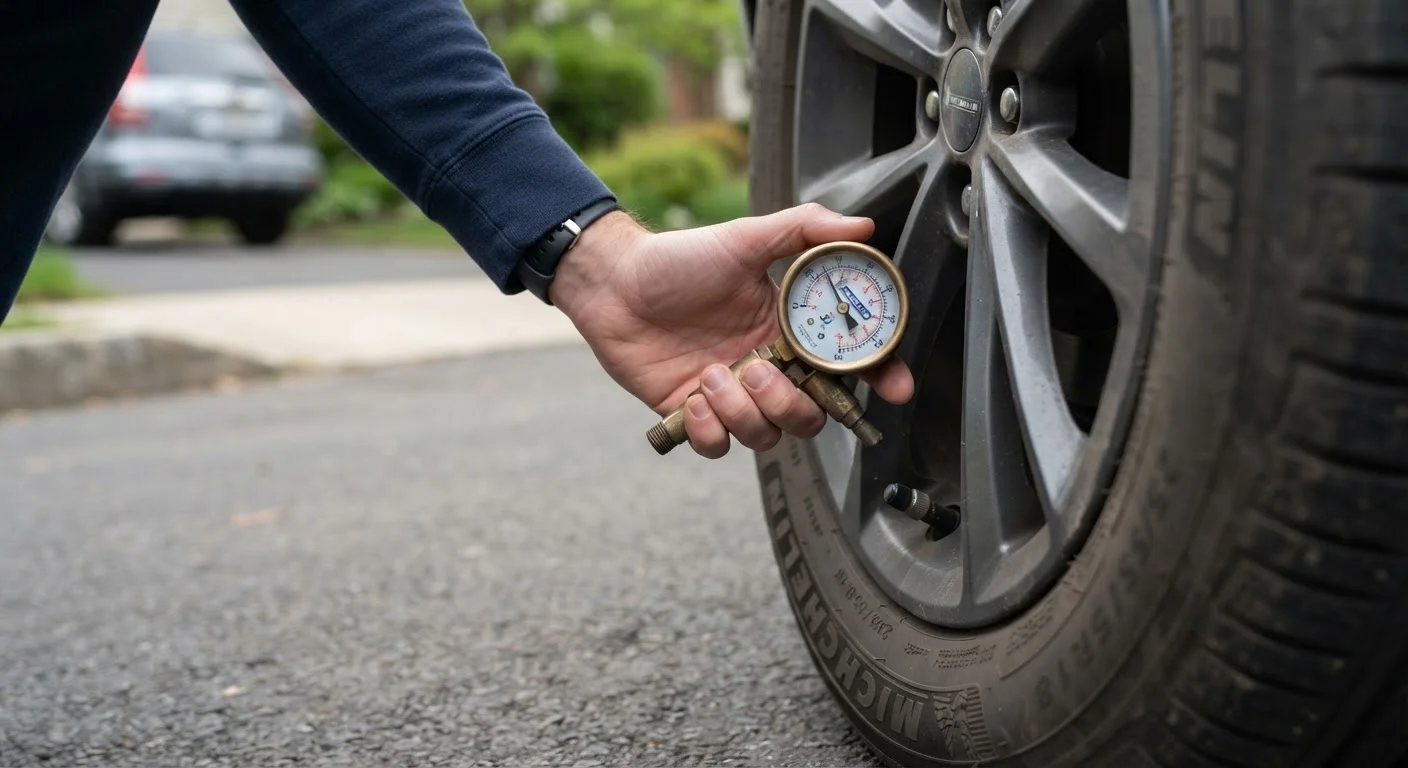
Measure tire pressure on all four tires (including the spare if accessible) and compare to the door jamb sticker, not the maximum pressure molded on the sidewall. Must
Check tread depth using a quarter: insert it upside down into the tread groove and note whether Washington's head is partially covered. If you see the full head, the tire is worn. Must
Walk around the vehicle and look for sidewall bulges, embedded objects, or uneven wear patterns that could indicate an alignment or suspension issue. Should

Lights and visibility

Turn on headlights, taillights, and reverse lights, then walk around the vehicle to confirm all bulbs are working before you arrive at the shop. Should
Activate both wiper blades and note any streaking, skipping, or squealing that indicates worn rubber. Should
Test the horn briefly in a safe location so you can flag it as a known issue if it is non-functional. Nice to have

Belts, hoses, and visual leaks

With the engine cold, visually trace visible belts for cracking, fraying, or glazing on the inner surface. Should
Squeeze accessible coolant hoses to feel for hardness or sponginess; both indicate degraded rubber that can fail under pressure. Nice to have
Check where you park for fresh fluid spots on the ground; oil is dark brown, coolant is often green or orange, and transmission fluid is typically red. Must

Documentation and prep

Confirm your current mileage and look up the manufacturer-specified oil grade in the owner's manual before arriving so you can verify what the shop uses. Must
Write down any warning lights, unusual noises, or driving symptoms you have noticed since the last service so you can describe them accurately at the desk. Must
Review your maintenance log or previous service receipt to track what was last replaced, which prevents duplicate work and gives the technician useful context. Should

Automotive Editorial Team is the collective byline for our editorial team and contributor network. Articles published under this byline or an editorial pen name are researched, written, and reviewed according to our editorial standards for clarity, consistency, and independence before publication.

View all articles by Automotive Editorial Team →
Disclaimer: The content provided on our blog site traverses numerous categories, offering readers valuable and practical information. Readers can use the editorial team’s research and data to gain more insights into their topics of interest. However, they are requested not to treat the articles as conclusive. The website team cannot be held responsible for differences in data or inaccuracies found across other platforms. Please also note that the site might also miss out on various schemes and offers available that the readers may find more beneficial than the ones we cover.

Recently Published