

Key Takeaways
Phantom load (standby power)
Phantom load is the electricity a device draws while switched off or in standby mode. It is sometimes called standby power or vampire power. The device is not doing useful work, but it still consumes electricity around the clock.
Standby draw is measured in watts. A device consuming 5 watts continuously for one year uses roughly 43.8 kilowatt-hours (kWh), which translates to real dollars on your utility bill depending on your local rate.
What is actually happening when a device sits idle
When you press the power button on a television or game console, the device does not fully shut down in most cases. It enters a low-power state that keeps the remote-control sensor active, maintains a network connection for automatic updates, or simply holds the internal clock ready. All of that requires electricity.
This is phantom load. The device is drawing power from the wall continuously, whether you are home or not, awake or asleep. A single device drawing 3 to 5 watts may sound negligible, but a home with 20 or 30 idle devices adds up to a meaningful drain over a month. This pattern also connects to small spending leaks that quietly erode a household budget without ever appearing as a single obvious charge.
5-10%
Share of home electricity from standby power
The Lawrence Berkeley National Laboratory has estimated that standby power accounts for approximately 5 to 10 percent of residential electricity use in U.S. homes.
$100+
Estimated annual phantom load cost per household
Based on Lawrence Berkeley National Laboratory standby estimates combined with average U.S. residential electricity rates, some households spend over $100 per year on power for devices that are not actively in use.
40+
Average number of powered devices in a U.S. home
The U.S. Energy Information Administration has noted that American households have steadily grown the number of always-on and standby-capable electronics over recent decades.
Which devices draw the most power at rest
Not all standby draws are equal. Set-top boxes supplied by cable and satellite providers are among the worst offenders. Many models run essentially at full power even when the screen is off, because they record scheduled programs or maintain a live connection. Older plasma televisions, audio-video receivers, and desktop computer setups with external power supplies also tend to consume more than modern equivalents.
Gaming consoles vary widely depending on the power mode selected. Some default to a setting that keeps the console network-connected for background downloads, which can draw 10 watts or more continuously. Switching to a true low-power mode in the console's settings reduces this significantly.
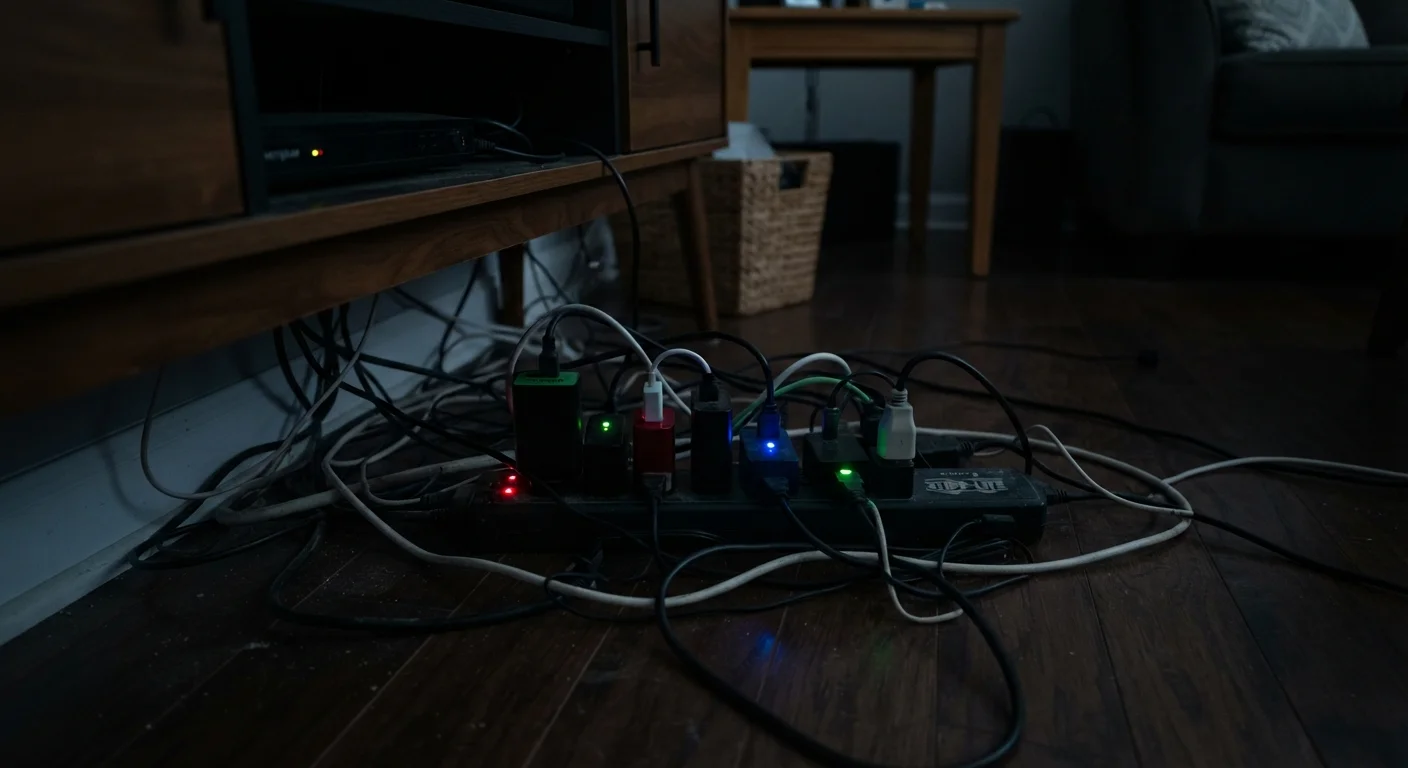
Devices with external power bricks, sometimes called wall warts, are worth checking too. A charger left plugged in with nothing connected still draws a small amount of power. Multiply that by every charger, lamp transformer, and power adapter in the house and the total becomes worth addressing.
How older electronics compare to newer ones
Older electronics were built under less stringent efficiency standards. A television sold before the Energy Star standby requirements tightened may draw two to three times more power at rest than a compliant model sold today. The same applies to older desktop computers and monitors.
This is part of why replacing aging devices can produce real long-term savings even before factoring in their active-use efficiency. If you are weighing whether to keep an older device running, total cost of ownership matters more than purchase price. Habits that shorten device lifespan compound this: an inefficient older device that also degrades faster costs more on both fronts.
A plug-in watt meter, available at most hardware stores, lets you measure exactly what any device draws in standby. This removes guesswork and tells you where to focus your effort first.
Practical ways to reduce phantom load
The two most straightforward approaches are manual unplugging and smart power strips. Unplugging works perfectly and costs nothing, but it is only practical for devices you use infrequently, such as a guest-room television or a seasonal appliance.
Smart power strips cut power to a group of outlets automatically when a primary device, such as a television, is switched off. Devices plugged into the secondary outlets, like a soundbar or gaming console, lose power at the same time. This requires no behavior change once it is set up.
For entertainment centers and home offices where multiple devices cluster together, this approach is worth considering when setting up a new household or reorganizing an existing one. Devices you no longer use regularly can also be retired. If a device has reached the end of its useful life, wiping it safely before recycling or donating is the responsible next step.
Start with a watt meter before buying anything
Before purchasing smart strips or any other solution, plug a watt meter into the outlet and measure each device's actual standby draw. Many meters cost under $25 and pay for themselves quickly. This tells you which devices are worth addressing and which are already efficient enough to ignore.