

Key Takeaways
Sleep hygiene
Sleep hygiene refers to the habits and environmental conditions that support regular, restorative sleep. It covers everything from consistent bedtimes and dark, cool rooms to limiting screen exposure before bed. Good sleep hygiene makes it easier for the body and brain to follow natural sleep-wake cycles. It is not a medical treatment; it is a set of everyday practices any family can adopt.
The body's sleep-wake cycle is governed by circadian rhythms, roughly 24-hour biological clocks regulated by light exposure and core body temperature. Disrupting these rhythms repeatedly has measurable effects on hormone regulation, immune function, and cognitive performance.
What sleep actually does for the body
Sleep is not passive downtime. During sleep, the brain processes memories and consolidates learning, the immune system releases proteins called cytokines that help fight infection and inflammation, and the body repairs tissues. Growth hormone, which matters for children and for muscle recovery in adults, is released primarily during deep sleep stages.
For children, these processes are especially concentrated. Sleep supports brain development in ways that waking hours simply cannot replicate. For adults managing work, stress, and caregiving, sleep is when the nervous system regulates stress hormones like cortisol. A night of poor sleep raises cortisol the following day, which affects mood, appetite, and decision-making.
Sleep also influences two hormones that control hunger: ghrelin (which signals appetite) and leptin (which signals fullness). When sleep is short, ghrelin rises and leptin falls. This is one reason tired family members often reach for calorie-dense foods the next day. It is not just willpower; it is biology.
A simple wind-down habit for the whole family
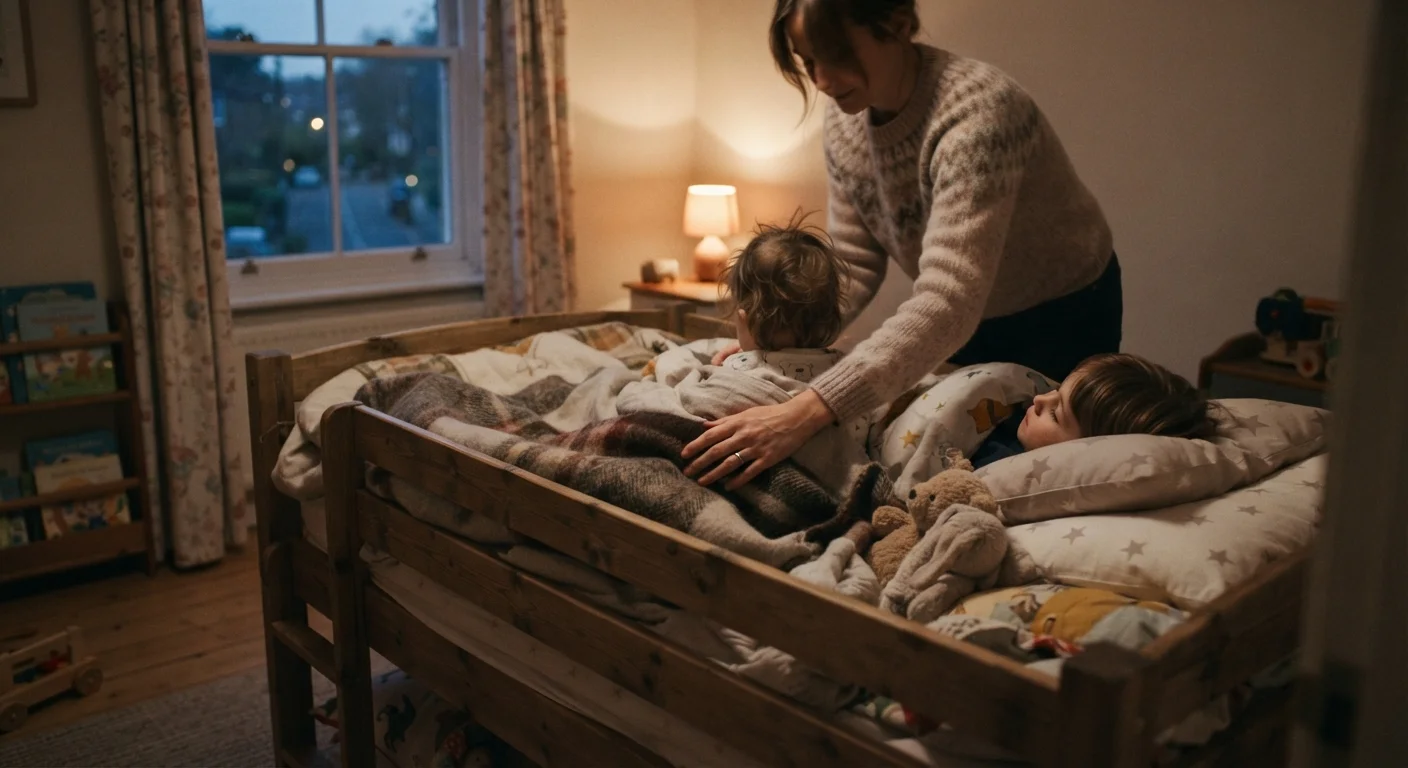
A consistent 20-minute wind-down routine before bed, such as dimming lights, reading, or light stretching, signals the nervous system to shift toward sleep. This works for children and adults alike. The routine itself matters more than its specific content; doing the same sequence each night is what builds the sleep association over time.
How sleep deprivation shows up in everyday family life
Chronic sleep loss rarely announces itself clearly. In adults, it accumulates gradually as shortened tempers, slower reaction times, and reduced patience. In children, it often looks like behavioral problems rather than sleepiness. A child who is consistently hard to wake, quick to cry, or unable to focus at school may be under-slept, not poorly behaved.
The National Sleep Foundation's published guidelines indicate that roughly one-third of American adults regularly get less than the recommended 7 hours per night. Adolescents face a specific challenge because biological puberty shifts their circadian rhythm later, making early school start times a genuine conflict with their sleep needs.
Families often treat sleep as the variable they compress when schedules get busy. Activities run late, screens stay on, and bedtimes slip. Over weeks, this creates a cumulative deficit that affects everyone's daily functioning. See the common barriers to healthy family habits article for a broader look at why these patterns persist and how to address them.
Practical ways to improve family sleep without overhauling your schedule
Consistent bedtimes are the single most evidence-supported sleep habit for families. The body clock responds to regularity. Going to bed and waking at the same time each day, including weekends, stabilizes circadian rhythms and makes falling asleep faster and easier over time.
Room conditions matter more than most families realize. The brain's core temperature needs to drop slightly to initiate sleep, so a cooler bedroom (generally around 65 to 68 degrees Fahrenheit for most adults) supports this process. Darkness and reduced noise also help. Blackout curtains and a consistent wind-down period of 20 to 30 minutes before lights-out are low-cost adjustments with meaningful impact.
Screens in bedrooms are one of the most consistent sleep disruptors for children and teenagers. Removing devices from sleeping areas, or at minimum setting them to stop notifications at a fixed time each evening, reduces both blue-light exposure and the temptation to stay awake.
Physical activity during the day supports deeper sleep at night. Families who build movement into daily routines often report improved sleep quality as a secondary benefit. The no-cost ways to build daily movement resource covers practical approaches that do not require equipment or memberships.
Sleep fits naturally into a broader wellness routine. The step-by-step family wellness routine guide outlines how habits like sleep, hydration, and movement reinforce each other when structured consistently. On the topic of hydration, adequate fluid intake throughout the day, and less so in the hour before bed, supports sleep quality by reducing nighttime disruptions. The family hydration guide covers this in plain terms.
This article is for general informational purposes and is not medical advice. If you or a family member has persistent sleep difficulties, consult a qualified healthcare professional for a proper evaluation.