

Key Takeaways
Start here
Why camping works as a travel strategy
Next
Campsite types and what they mean for your trip
Then
Gear basics: what you actually need first
When you're ready
Booking and reservation logistics
Before you go
Making the first trip go smoothly
Why camping works as a travel strategy
Accommodation is the single largest variable in most family travel budgets. Camping addresses it directly. A nightly campsite fee for a family of four can run $15 to $40 at many public parks, compared to $150 or more for a budget hotel room. Across a week-long trip, that difference is substantial.
Beyond cost, camping changes the shape of a trip. Because the campsite is the base, families tend to spend more time outdoors and less time commuting between paid attractions. Meals cooked over a camp stove cost a fraction of restaurant meals. These savings compound quickly, and they free up budget for experiences that actually matter to your family, whether that is a guided hike, a kayak rental, or simply more days on the road.
Camping also pairs well with other cost-reduction strategies. Shoulder-season travel reduces both campsite fees and crowd pressure at popular parks. Combining camping with a road trip keeps per-night costs low across multiple destinations. For a fuller look at where road trip budgets actually break down, our road tripping on a budget guide covers the overlooked costs families most often miss.
Start with a familiar destination
For a first camping trip, choose a park or campground within two hours of home. Proximity means you can head back if something goes wrong without losing the whole trip. It also keeps fuel costs low, which matters if you are still building out your gear kit. Once you have a trip or two under your belt, longer destinations become much more manageable.
Campsite types and what they mean for your trip
Not all campsites work the same way, and choosing the wrong type for your family's first trip is one of the most common sources of frustration.
Primitive site
A campsite with no utility hookups, running water, or restrooms at the site itself. It is the most basic and usually lowest-cost camping option.
Developed site
A campsite that provides amenities such as a picnic table, fire ring, and nearby restroom access. Many also have water spigots and some offer electrical hookups.
Full-hookup site
A campsite with connections for electricity, water, and sewer, designed primarily for RVs and trailers rather than tent camping.
Glamping
A style of camping in furnished tents, yurts, or cabins where bedding and basic comforts are provided. It requires no personal gear but costs more per night than standard camping.
Footprint
A ground cloth placed under a tent to protect the tent floor from abrasion and moisture from the ground below.
Shakedown trip
A short, low-stakes practice trip taken close to home to test gear and routines before a longer or more remote camping journey.
Primitive sites have no utilities: no water, no electricity, sometimes no toilets. They are the lowest-cost option and work well for experienced campers, but they add logistics that can overwhelm a first-timer with young kids.
Tent-only developed sites are the middle ground most first-time camping families land on. They include picnic tables, fire rings, and access to restrooms and running water nearby. Some have electrical hookups.
Full-hookup sites supply electricity, water, and sewer connections, primarily for RVs and trailers. If your family is tent camping, these are rarely necessary.
Glamping sites (a contraction of glamorous camping) offer furnished tents, yurts, or cabins with beds and sometimes climate control. They cost more per night but require no gear investment, which can make them a reasonable introduction for hesitant family members.
For a detailed breakdown of how different park systems compare on amenities and cost, the national parks vs. state parks comparison is worth reading before you book.
Gear basics: what you actually need first
The camping gear industry sells an enormous amount of equipment most families never use. For a first trip, the functional list is short.
- A tent with a footprint (a groundsheet that goes under the tent floor to protect it and reduce moisture)
- Sleeping bags rated for temperatures at least 10 degrees below the overnight low you expect
- Sleeping pads, which insulate from the ground and improve sleep quality significantly
- A camp stove and fuel canisters
- A cooler with enough capacity for your food and ice
- A headlamp or lantern for each person
- A basic first-aid kit
- Rain gear for every family member
Many REI Co-op locations and some outdoor retailers offer gear rental programs. Public libraries in several states also lend camping gear through outreach programs. Borrowing or renting before buying lets you test what your family actually uses before spending money on equipment you may only use once.
The family vacation planning checklist has a packing section that translates well to camping trips and can help you avoid arriving without something critical.
Booking and reservation logistics
Reservation timing is where many families get tripped up. Popular campgrounds in national parks can fill within minutes of opening their booking windows, which at many federal sites opens six months in advance. State parks vary: some open reservations several months out, others a few weeks.
Recreation.gov handles reservations for most federally managed campgrounds. State parks run their own systems, which differ by state. Checking the specific park's reservation page well before you plan to travel is the only reliable way to know the window.
A few practical notes: some campgrounds hold a portion of sites for walk-up arrivals, so showing up early on the day of or the day before is sometimes worth trying if reservations are gone. County and municipal parks are frequently overlooked and often have more availability than state or national parks. Weekday trips have significantly more site availability than weekends at most parks during summer.
If your trip involves multiple destinations over several days, the planning framework in our week-long family vacation guide applies directly to a camping itinerary.
Making the first trip go smoothly
The most consistent advice from families who camp regularly: do a shakedown trip first. A one-night stay at a campground within an hour of home costs almost nothing and catches every problem, from a tent with a missing pole to a sleeping bag that is not warm enough, before you are three states away.
Meal planning matters more than most first-timers expect. Breakfasts and dinners at a campsite are straightforward, but lunches during activity-heavy days often get skipped or replaced with expensive food at park concessions. Packing sandwich ingredients and snacks in a dedicated day bag avoids this.
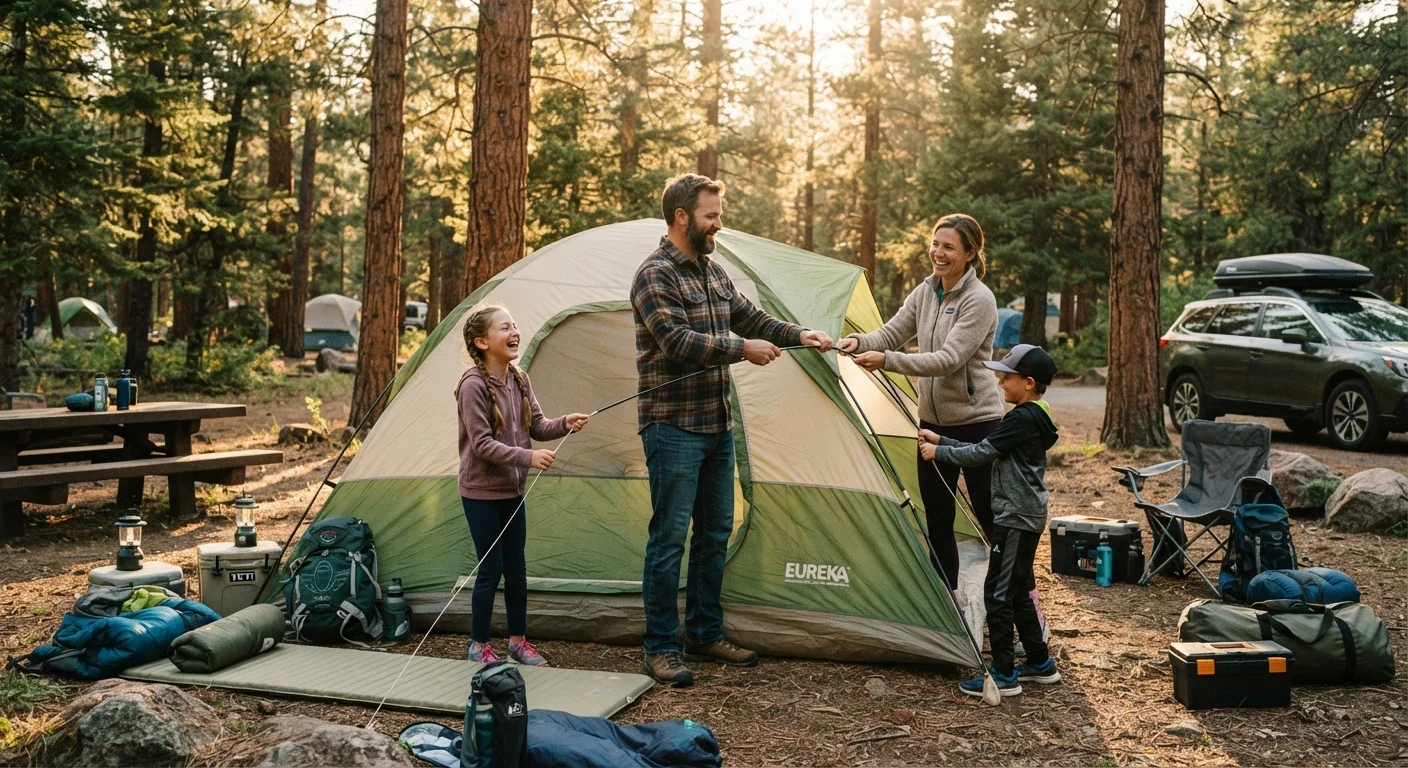
Children do better when they have a role. Assigning specific jobs, setting up the tent, gathering firewood within marked areas, managing the flashlights, gives kids investment in the process rather than boredom waiting for adults to finish. It also speeds setup.
Finally, check the fire regulations and any bear safety rules for your specific park before arrival. Rules vary significantly by location and season, and parks do enforce them. For a broader look at how to keep the travel budget intact from planning through the final day, where family travel budgets break down covers the patterns worth knowing.