

Key Takeaways
Option A
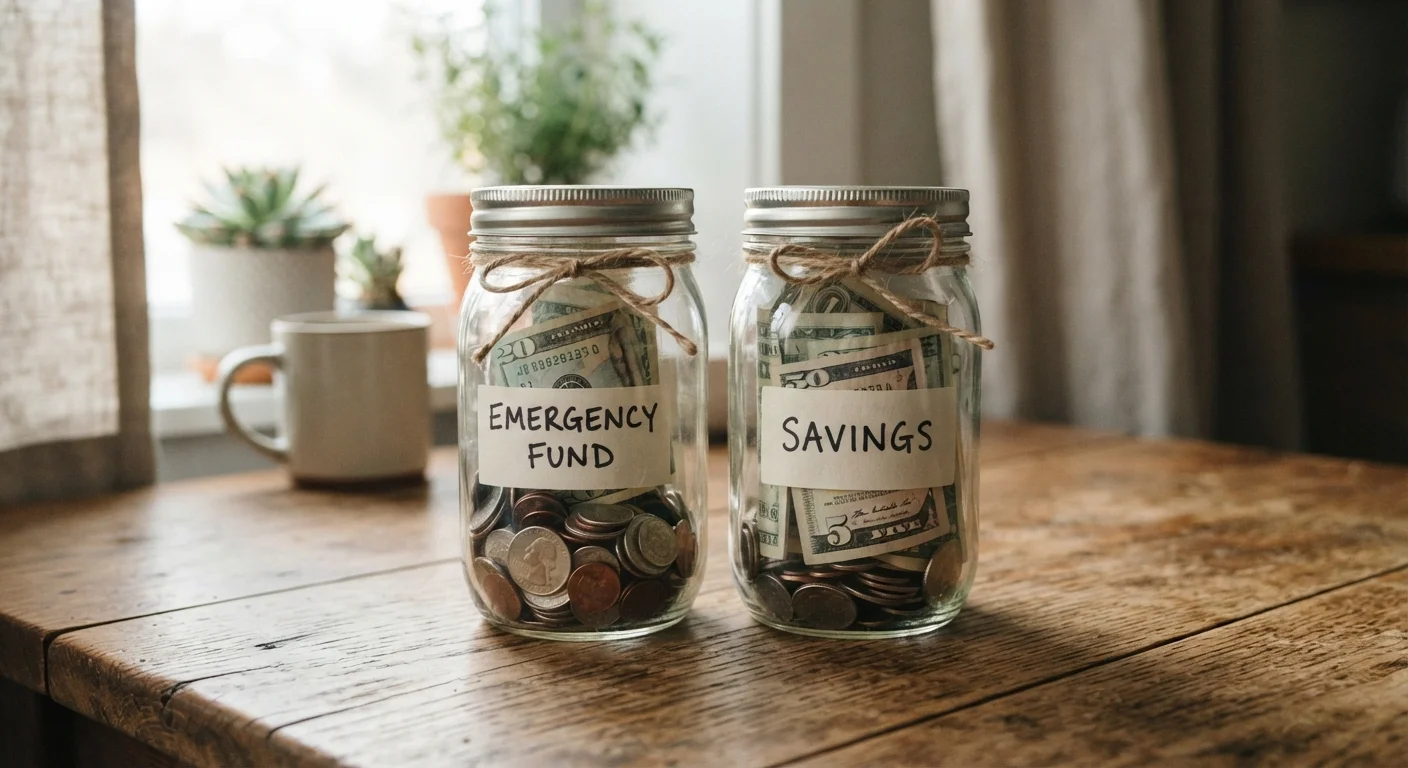
Emergency Fund
A dedicated cash reserve for unexpected financial shocks.
Best for: Households that need a financial safety net for job loss, medical bills, or urgent car and home repairs.
Option B
Savings Account
A flexible deposit account for goals you plan ahead for.
Best for: Families building toward a specific target such as a vacation, appliance replacement, or a home down payment.
If your household has no financial cushion at all
Emergency Fund
Without a cash buffer, any unexpected expense tends to land on a credit card. Building even one month of essential expenses in a dedicated fund reduces that risk significantly.
If you already have a solid emergency fund and want to work toward a goal
Savings Account
Once your safety net is in place, a separate savings account lets you build toward a vacation, appliance, or down payment without touching your emergency reserves.
If you are balancing debt payments alongside saving
Emergency Fund
A small emergency fund, even $500 to $1,000, can stop you from adding new debt every time an unexpected cost comes up while you pay down existing balances.
If you want to earn the most interest possible on idle money
Savings Account
High-yield savings accounts typically offer better interest rates than standard accounts. Your emergency fund can also live in one of these, as long as the money stays accessible within one to two business days.
What each one actually does
An emergency fund is money you set aside specifically for unplanned financial shocks: a sudden job loss, an unexpected medical bill, a failed water heater, or a car repair you cannot postpone. The defining quality is that you touch it only when something urgent forces you to, not when you want something.
A savings account is a deposit account at a bank or credit union that holds money you plan to use later. That money might be for a family vacation, a new appliance, holiday gifts, or a future home purchase. The target and timeline are known in advance.
The distinction sounds simple, but it matters in practice. If both pools of money sit in the same account, the line between "emergency" and "I want this" becomes easy to blur. Keeping them separate makes each purpose visible and harder to raid for the wrong reason.
How the two compare side by side
The table below captures the main differences at a glance. Understanding these points helps you decide how to structure both accounts rather than treating them as interchangeable.
| Criterion | Emergency Fund | Savings Account |
|---|---|---|
| Primary purpose | Cover unexpected, urgent expenses | Build toward a planned goal |
| When you use it | Unplanned events only | When your target date or goal arrives |
| Typical target amount | 3 to 6 months of essential expenses | Whatever the specific goal costs |
| Access speed needed | Fast, within 1 to 2 business days | Flexible, matches goal timeline |
| Replenishment expectation | Rebuild after each withdrawal | Reset when goal is reached and new one begins |
| Account type options | High-yield savings, money market | Standard or high-yield savings |
One thing the table cannot show is the psychological value of separation. When a family sees a dedicated emergency balance, they are more likely to leave it alone during non-emergency spending decisions. That mental boundary is part of what makes the system work.
How much to keep in each
For an emergency fund, the commonly cited target is three to six months of essential household expenses. Essential expenses include rent or mortgage, utilities, groceries, insurance premiums, and minimum debt payments. It does not include dining out, streaming subscriptions, or discretionary spending.
That target can feel daunting if you are starting from zero. A more practical approach is to set an initial goal of $500 to $1,000, then build from there. Even a small buffer changes your options when something unexpected happens. See how families can work on saving and debt at the same time if competing financial pressures make it hard to set anything aside.
For a savings account, the right amount depends entirely on the goal. A family saving for a $2,400 vacation in two years needs to set aside $100 a month. There is no universal number, which is why savings accounts work best when tied to a specific target and timeline.
Where to keep both accounts
Both an emergency fund and a savings account can live at the same institution. Many banks let you open multiple savings accounts and label each one. That structure keeps both accounts accessible while making the purpose of each obvious every time you log in.
One option worth knowing about is a high-yield savings account, which is a standard deposit account that pays a higher interest rate than a traditional passbook account. Your emergency fund can sit in one of these as long as the money remains accessible quickly, typically within one to two business days. Locking emergency money into a certificate of deposit or any account with withdrawal penalties is generally a poor fit, because you may need the funds before the term ends.
Building consistent habits around these accounts is what makes them effective over time. Steady money habits describe how small, regular transfers add up without requiring large lump-sum contributions. You can also find practical guidance on budgeting methods that help track where your money goes.
This article is for general informational purposes only and does not constitute personalized financial advice. Consult a qualified financial professional for guidance specific to your situation.