

Key Takeaways
Our Verdict
Home cooking and meal kits are not competing opposites but two tools with different strengths. Home cooking offers the most control over ingredients and cost, while meal kits lower the barrier to preparing unfamiliar, balanced meals. The approach that works is the one your family will actually stick with consistently.
| Best for | Recommended |
|---|---|
| Families with tight budgets and flexible time | Home cooking from scratch |
| Households that struggle with meal planning or decision fatigue | Meal kit services |
| Families building cooking skills alongside healthy habits | Meal kit services |
| Those wanting maximum ingredient control and variety | Home cooking from scratch |
What each approach actually involves
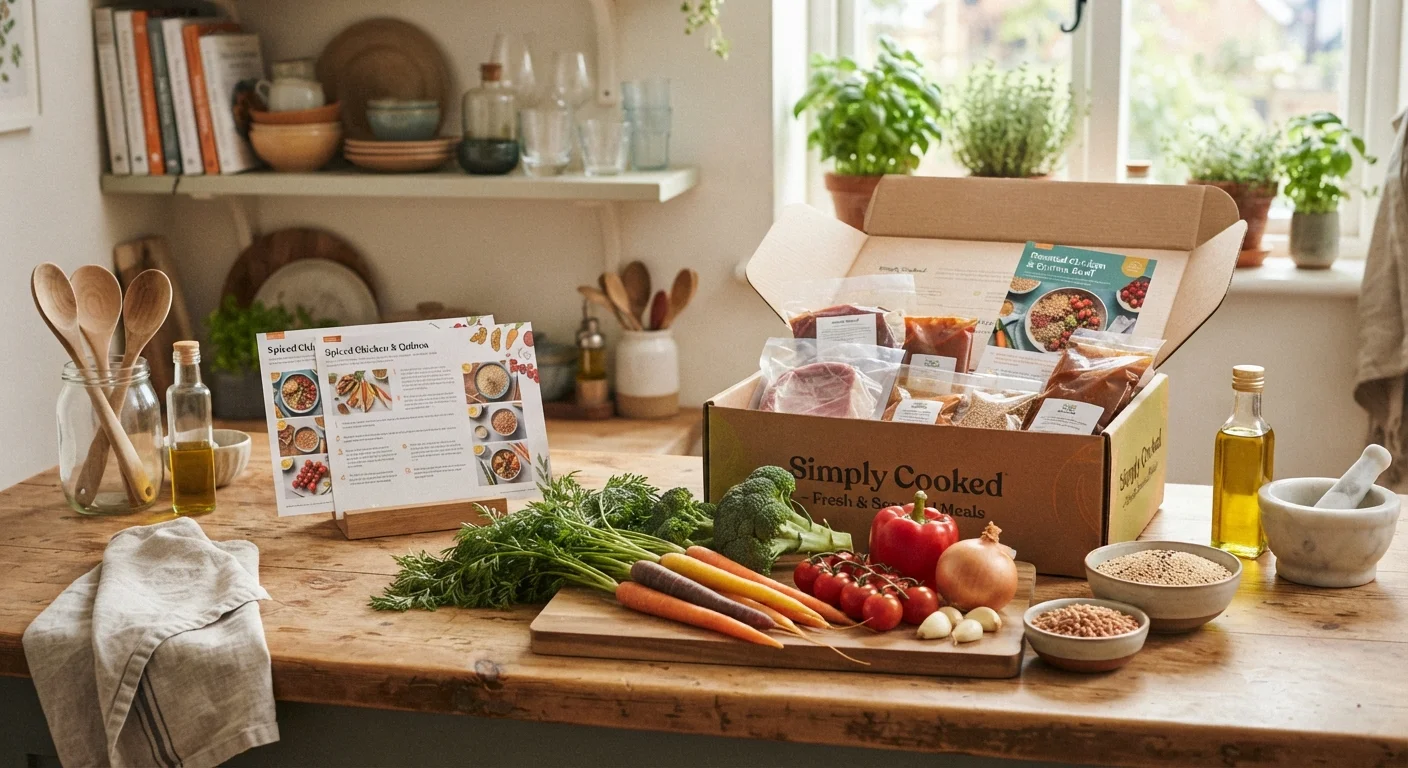
Home cooking from scratch means sourcing your own ingredients, planning meals, and preparing everything in your kitchen. The process includes grocery shopping, measuring, and managing food storage. Meal kit services deliver pre-portioned ingredients with step-by-step recipe cards, removing the planning and much of the shopping from the equation.
The distinction matters because the friction points are different. With home cooking, the challenge is usually planning ahead and managing ingredient inventory. With meal kits, the challenge is cost and commitment to a subscription schedule. Understanding which friction your household finds harder to manage helps clarify which option is more realistic to maintain. For a broader look at how everyday habits form and break, see why families struggle to build healthy habits.
Nutritional quality: what the evidence suggests
Research published in public health nutrition literature consistently finds that meals prepared at home tend to be lower in sodium, saturated fat, and added sugar compared with restaurant meals. Meal kits occupy a middle ground: they are prepared at home, which preserves some of that advantage, but the nutritional profile depends heavily on which service and which recipe a family selects.
Neither format guarantees good nutrition on its own. A home-cooked meal built around refined grains and processed condiments is not inherently healthier than a meal kit centered on vegetables and lean protein. The ingredient composition matters more than the delivery method. For context on how whole and processed ingredients compare, the article on whole foods vs. processed foods breaks down what those distinctions mean in practical terms.
| Home cooking | Meal kit services | |
|---|---|---|
| Average cost per serving | Lower, varies by ingredients | Higher, includes packaging and logistics |
| Meal planning required | Yes, significant | Minimal, handled by service |
| Ingredient control | Full control | Limited to available recipes |
| Food waste risk | Moderate to high without planning | Low, pre-portioned ingredients |
| Cooking skill development | High, builds broad skills over time | Moderate, guided but narrower |
| Nutritional quality | Depends on ingredient choices | Depends on recipe selection |
| Time to get dinner ready | Variable, higher with planning | Active cook time similar, less planning |
This article provides general nutrition information and is not a substitute for personalized advice from a registered dietitian or qualified healthcare professional.
Cost and time: the real trade-offs
Home cooking is almost always less expensive per serving when a family plans well and minimizes waste. Meal kits typically cost more per meal than comparable home-prepared dishes because the pricing includes packaging, portioning, and logistics. However, the cost comparison shifts when food waste is factored in. Buying a full bunch of herbs for one recipe, then discarding the rest, erodes the savings that home cooking theoretically provides.
Time works differently. Meal kits reduce planning and shopping time but do not significantly shorten active cooking time. Home cooking requires more upfront investment in meal planning, which is a genuine barrier for busy families. Batch cooking on weekends and maintaining a rotating list of simple, reliable recipes are two practical ways to reduce the weekly time burden without switching to a paid service.
Habit-building: which approach makes consistency easier
Consistency is what produces long-term dietary change. A nutritionally perfect meal prepared once has far less impact than a reasonably balanced meal prepared four nights a week for a year. From a habit-formation perspective, the approach that removes more friction for a specific household is the one more likely to produce lasting change.
Meal kits lower the decision load, which is one of the most common reasons families abandon home cooking during busy periods. Reducing the number of choices required to get dinner on the table makes the behavior easier to repeat. Home cooking, when supported by a solid routine, builds a wider and more flexible skill set over time. Families who want to build both skills and habits together may find structured guidance in building a family wellness routine.
Try a hybrid approach before committing
If you are unsure which method suits your family better, consider rotating between the two for a month. Use home cooking for staple meals your household already knows, and use a meal kit for one or two nights when planning feels hardest. Tracking how each approach affects your stress level and food variety can help you decide where to put more of your grocery budget long term.
A practical framework for choosing
Rather than treating this as a permanent choice, most families do well to treat both approaches as adjustable tools. A household might rely on home cooking most weeks and use a meal kit subscription during periods of heavier work schedules or when introducing children to new foods. The goal is a pattern that is genuinely sustainable, not an idealized routine that collapses under real-life pressure.
When evaluating meal kits, check the sodium content and ingredient lists on sample recipes before committing to a plan. When building a home cooking routine, start with a small number of reliable meals rather than attempting full weekly meal planning immediately. Small, repeatable steps tend to compound into durable habits more reliably than ambitious overhauls. For more on the habits that support long-term health, preventive wellness habits worth prioritizing covers what the evidence supports across different life stages.