

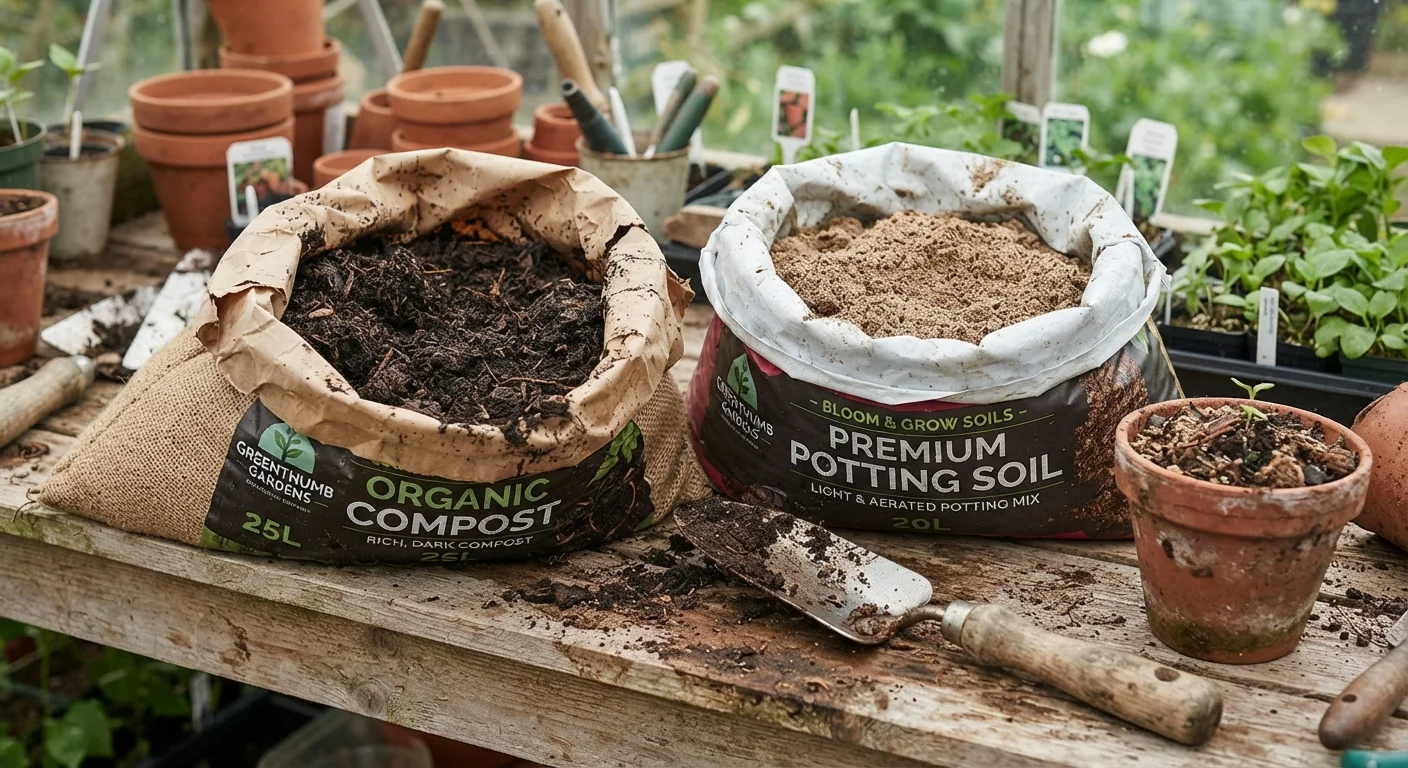
Key Takeaways
Option A
Compost
The organic matter that feeds soil life and improves structure.
Best for: Amending existing beds, boosting nutrients, and improving drainage or water retention in native soil.
Option B
Bagged garden soil
The ready-to-use growing medium for filling new beds.
Best for: Starting new raised beds or filling containers where no existing ground soil is present.
If you are improving an existing in-ground vegetable or flower bed
Compost
Tilling 2 to 3 inches of compost into existing ground soil feeds soil microbes and improves texture without displacing the native soil structure.
If you are filling a brand-new raised bed from scratch
Bagged garden soil
Bagged garden soil provides the volume and drainage structure a raised bed needs; layer compost on top or blend it in at about 25 percent of the total volume.
If you want to reduce ongoing supply costs year after year
Compost
A backyard compost bin converts kitchen scraps and yard waste into free amendment, reducing how much you buy each season.
If you are gardening in containers on a patio or balcony
Bagged garden soil
Containers need a consistent, well-draining growing medium; a potting or garden soil blend holds its structure in confined spaces better than compost alone.
What each product actually is
Compost is decomposed organic material, things like food scraps, leaves, grass clippings, and plant trimmings that have broken down into a dark, crumbly substance. It contains nutrients, beneficial microorganisms, and organic matter that soil needs to support plant roots. Compost is not, by itself, a growing medium. It does not have enough mineral particles or structural density for roots to anchor properly when used alone.
Bagged garden soil is a manufactured blend sold in large bags, typically combining native or composted soil with fillers such as sand, bark, or perlite (a lightweight volcanic mineral that improves drainage). Its purpose is volume: giving roots a place to grow. The organic content varies widely by product and brand, and some mixes contain very little of it. That is why a bag of garden soil bought in spring may feel light and airy but still leave plants hungry by midsummer.
The confusion at the hardware store is understandable. Both products are brown, both go in garden beds, and packaging language often blurs the line. The practical difference is function: compost feeds soil, garden soil fills space.
Head-to-head comparison
Looking at the two products across specific criteria makes the choice more concrete before you load up a cart.
| Criterion | Compost | Bagged garden soil |
|---|---|---|
| Primary function | Amends and feeds existing soil | Fills and creates growing space |
| Organic matter content | High (nearly 100%) | Low to moderate (varies by mix) |
| Use alone in a bed | Not recommended; too rich, may compact | Workable but benefits from amendment |
| Nutrient availability | Releases nutrients slowly over time | Often minimal without added fertilizer |
| Typical cost per cubic foot | Higher per cubic foot bagged | Lower per cubic foot bagged |
| DIY production possible | Yes, via home composting | Not practical to replicate at home |
| Best application depth | 2 to 3 inches worked into soil | Fill full bed depth (6 to 12 inches) |
One number worth noting: bagged garden soil typically costs less per cubic foot than bagged compost, so using each for its actual purpose rather than doubling up on one product tends to be more economical. For more on building and filling raised beds without overspending, see the guide to raised garden beds on a budget.
How to combine them for the best results
For a new raised bed, a commonly used starting mix is roughly 25 percent compost blended with 75 percent bagged garden soil by volume. This proportion gives roots enough structure to anchor while supplying the organic matter that supports sustained growth. Some gardeners add perlite at about 10 percent of total volume to improve drainage in heavier mixes, though this is optional depending on what you plan to grow.
For in-ground beds, spread 2 to 3 inches of compost over the surface and work it into the top 6 to 8 inches of soil before planting. You do not need to add bagged garden soil at all in this case. Native ground soil, once amended with compost each season, generally builds fertility on its own over time.
25%
Compost share in a basic raised-bed mix
A 1:3 compost-to-soil ratio is a widely referenced starting point among cooperative extension gardening guides for vegetable beds.
3-6 months
Time to finished compost with active management
University extension programs generally cite this range for hot-composting methods that involve regular turning and moisture monitoring.
Topdressing with an inch of compost each spring, without tilling it in, is an option that disturbs fewer soil organisms and still delivers organic matter as rain and worms move it downward. This method suits perennial beds or areas where you prefer minimal disruption.
Reducing what you buy with home composting
A backyard compost bin or pile turns kitchen scraps and yard waste into free amendment within roughly 3 to 6 months under active management. Layering green materials (fruit and vegetable scraps, fresh grass clippings) with brown materials (dried leaves, cardboard, straw) and turning the pile every week or two speeds decomposition. Moisture level matters: the pile should feel about as damp as a wrung-out sponge.
Even a modest bin can produce enough compost to topdress a couple of raised beds each season, reducing how much bagged product you buy. For gardeners looking to cut water costs alongside amendment costs, low-water landscaping strategies also benefit from compost additions, since organic matter helps soil retain moisture and reduces how often you need to irrigate.
Municipal compost programs are another low-cost source. Many cities sell or give away finished compost made from collected yard waste, often at a fraction of retail bag prices. Checking with your local public works or parks department can locate these programs.
Check the bag label before you buy
Bagged products labeled 'topsoil,' 'garden soil,' and 'potting mix' are not the same thing. Topsoil is typically unprocessed fill that may be heavy and poorly draining. Potting mix is formulated for containers and can be too light and fast-draining for in-ground use. Reading the ingredient list and intended use on the bag before purchase helps avoid buying a product that does not match your project.