
Low-Water Landscaping: Ground Cover and Native Plant Strategies That Cut Irrigation Bills

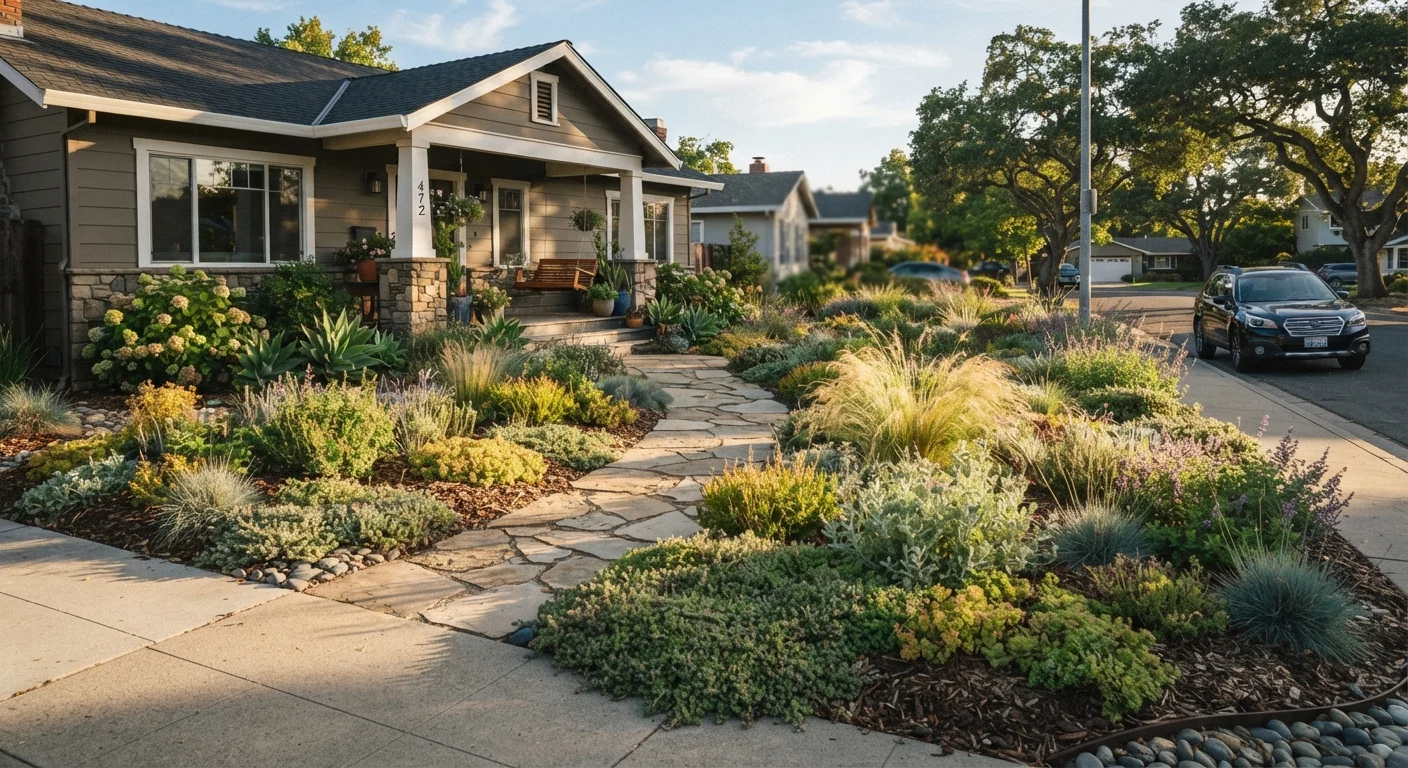
Key Takeaways
Why your lawn is your biggest water bill
Outdoor water use accounts for roughly 30 percent of a typical household's total water consumption, according to the U.S. Environmental Protection Agency. For many families, the lawn is almost all of that. Grass requires frequent, deep watering, especially during summer, and much of that water evaporates before roots can absorb it.
The good news is that reducing irrigation costs does not mean accepting a barren yard. Ground covers, native plants, and smart mulching can hold soil moisture, crowd out weeds, and keep a yard looking full and well-maintained at a fraction of the watering effort. Outdoor water waste is one of those spending leaks that quietly inflates monthly bills without drawing much attention.
The strategies below are organized by effort and cost, so you can start where your budget allows and build from there.
Replace high-water turf zones with ground cover plants
Traditional lawn grasses, particularly cool-season varieties like Kentucky bluegrass, consume far more water than most spreading ground covers. Plants such as creeping thyme, clover, and ajuga form a dense mat that handles light foot traffic, suppresses weeds, and survives on much less irrigation.
Clover is worth special mention: it fixes nitrogen from the air, which reduces fertilizer needs on top of water savings. A mixed clover-grass lawn can cut irrigation requirements substantially compared to a pure grass lawn, and clover stays green longer into dry spells.
Before removing existing turf, check whether your municipality offers rebates for lawn conversion. Many water utilities across the western and southwestern U.S. run programs that offset the cost of replacing grass with drought-tolerant alternatives.
Clover fixes nitrogen from the air, cutting both water and fertilizer needs at once.
Choose native plants matched to your region
Native plants are those that grew in a region before widespread European settlement. Because they evolved in local soil and rainfall conditions, established native plants generally need no supplemental watering during a normal growing season. They also support local pollinators, which benefits vegetable and fruit gardens nearby.
The right natives depend on where you live. Coneflowers and black-eyed Susans work well across much of the Midwest and East. Lavender and sage thrive in dry western climates. Ferns and native azaleas suit humid southeastern yards. Your local cooperative extension office, operated through a state university system, can give you a free plant list specific to your county and soil type.
When buying native plants, bare-root or plug-sized transplants cost less than gallon containers and establish just as well when planted in fall or early spring.
Established native plants typically need no supplemental watering during a normal growing season.
Apply mulch correctly to slow evaporation
A 2- to 3-inch layer of organic mulch, such as shredded bark, wood chips, or straw, significantly slows moisture loss from soil. Research from land-grant university extension programs consistently shows that mulched beds retain moisture longer than bare soil, which translates directly to less frequent watering.
Avoid piling mulch against plant stems or tree trunks, since trapped moisture promotes rot and can attract pests. Keep a small gap around the base of each plant. Also avoid going much deeper than 3 inches: very thick mulch layers can actually repel water by becoming hydrophobic (water-repelling) when they dry out.
Wood chip mulch sourced from local tree trimming companies is often free or available at very low cost. Searching for municipal compost giveaway programs in your area can also turn up bulk organic material at no charge.
A 2- to 3-inch mulch layer can hold soil moisture long enough to cut watering frequency by half.
Group plants by water need using hydrozoning
Hydrozoning means placing plants with similar water requirements together in the same bed or irrigation zone. When drought-tolerant natives share a zone with thirsty annuals, the whole zone gets watered to satisfy the neediest plant, which wastes water on plants that do not need it.
A practical way to start is to walk your yard and categorize existing plants as high, medium, or low water users. Move or replace outliers over one or two seasons rather than all at once. Once zones are consistent, you can set each irrigation circuit to run only as long as the plants in that zone actually require.
If you use a manual hose rather than an irrigation system, hydrozoning still helps because you learn which areas need attention and which can go another week without watering.
Grouping plants by water need stops you from overwatering drought-tolerant plants to keep thirsty ones alive.
Improve soil structure to boost water retention
Sandy soils drain fast and dry out quickly. Clay soils pool water at the surface rather than letting it reach roots. Either condition causes more watering, since plants are not actually accessing the moisture available. Adding organic matter, such as finished compost, improves both soil types by creating pore spaces that hold water and allow drainage simultaneously.
Tilling or working compost into the top 6 to 8 inches of soil before planting a new bed is the most effective timing. For established beds, top-dressing with a 1-inch layer of compost each fall allows it to work in naturally over winter.
Healthier soil structure also supports deeper root growth, which lets plants draw moisture from a larger volume of earth, reducing how often they need irrigation from above.
Adding compost to soil lets plants draw moisture from a larger volume of earth, reducing irrigation frequency.
Install a simple drip or soaker hose system
Overhead sprinklers lose significant water to evaporation and wind drift, particularly during midday watering. Drip irrigation and soaker hoses deliver water directly to the root zone, where it can be absorbed before it evaporates. The EPA estimates that drip systems can be 90 percent efficient compared to 50 to 70 percent efficiency for conventional sprinklers.
Basic drip kits for garden beds are widely available at hardware stores and are within reach for most DIY skill levels. Soaker hoses, which are porous tubes that seep water along their length, are even simpler: connect one to a standard outdoor faucet with a timer and your beds water themselves at a set schedule.
Watering in the early morning, when temperatures are cool and wind is usually calm, further reduces evaporation loss regardless of the delivery method you use.
Drip irrigation can be 90 percent efficient, compared to 50 to 70 percent for conventional sprinklers.
Putting it all together affordably
None of these strategies requires doing everything at once. Many homeowners start by mulching one or two beds, then replace a patch of struggling turf with a ground cover during the following season. Tracking your water meter before and after each change gives you concrete feedback on what is working.
Soil preparation is the step most people skip, but it has the largest effect on long-term success. Well-amended soil holds moisture longer, which means plants need less supplemental watering. See the difference between compost and bagged garden soil before you buy materials, since choosing the wrong product is a common and avoidable expense.
If you are planning new beds alongside these changes, building raised garden beds on a budget can give you more control over soil composition from the start. Pairing low-water landscaping with a seasonal maintenance calendar keeps the whole yard on a predictable, lower-cost schedule.
Start small and measure results
Pick one area of your yard, such as a strip of struggling grass along a fence or a dry corner bed, and apply two or three of these strategies there first. Check your water meter readings before and after to see the actual impact. Seeing a measurable reduction in one zone makes it easier to justify expanding the approach to the rest of the yard over time.